Rozee Research
recently did a survey to find out from the educated community of
Pakistan as to how, if applicable, YouTube ban has affected them.
Rozee.PK’s survey tried to dig out into which sub-sector, students
vs. employed has been affected by the YouTube ban and in what ways. Are
people happy with ban? do they perceive it as justified? Who do they
blame, (Google, Government etc. ) and why? Has the business been
affected (less revenue generation from ads), what alternatives have been
in use, and whether this ban has really resulted in something
beneficial for the people of Pakistan and of course the economy at
large.
More than 3000 people responded to this survey from across Pakistan
and here are the results that were exclusively shared with ProPakistani
for the readers:
Highlights:
- 30 percent respondents came to know of ban through digital media channels
- 88 percent respondents used to access and use YouTube before ban, who don’t use YouTube anymore
- 68 percent people think that they are unable to watch videos of their choice anymore
- 30 percent people have shifted to alternate video service
- Before ban, majority of users used to watch instructional and
self-help videos (75%), while half of respondents said that they used to
watch Islamic Lectures (52%) while 69% said that they used to watch
movie trailers and songs
- After the ban, 40 percent respondents have unfavourable opinion about Google, before ban this ratio was mere 6 percent
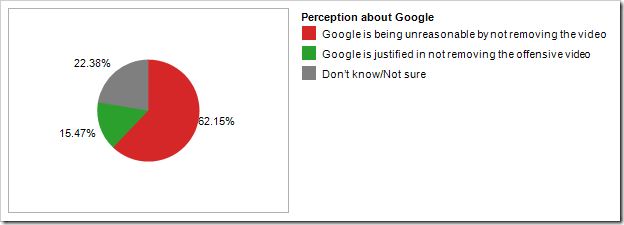
- 62 percent respondents said that Google is being unreasonable for not removing the anti-Islam videos which irked the ban
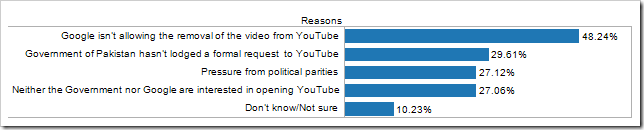
- 48 percent respondents believe that Google is the real culprit for getting YouTube banned
- 29 percent believed that Government of Pakistan hasn’t lodged a formal request to YouTube
- 27 percent think that neither Google nor Government of Pakistan is interesting in opening YouTube
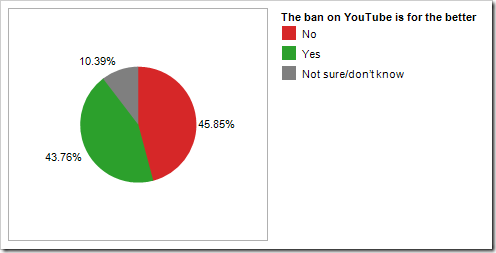
- 46 percent respondents were unhappy about the ban, 43 percent were okay with the ban
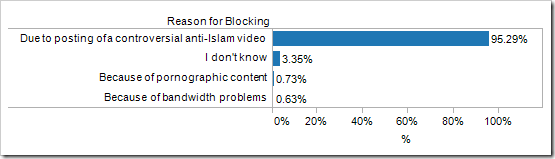
Why YouTube is Banned?
Surprisingly 95% of the respondents who took the survey knew the
answer to that one. The rest either didn’t know (3%) or thought it’s
because of bandwidth issues (0.6%) or pornographic content on YouTube
(0.7%).
Power of Media
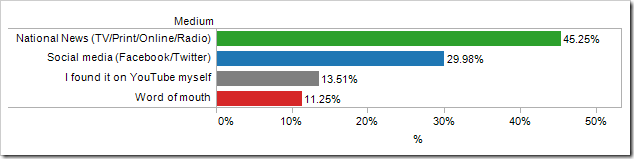
The power of media in making those 95% aware of the video’s presence
can be seen in the fact that a whopping 45% of them found about it via
National News (TV/Print/Radio/Online). 30% of them found about it via
their online social media connections; 14% found it themselves on
YouTube; and 11% learnt about it via grapevine.
Decline in Viewership
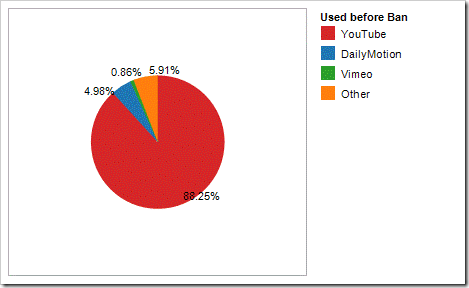
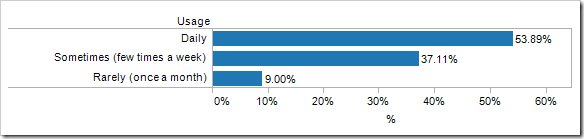
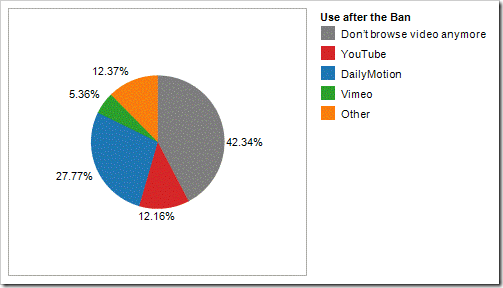
Before the ban on YouTube a whopping 88% of the respondents used it. Of these, 54% used to browse videos on YouTube daily.
After the ban on YouTube, the viewership has declined to 12% who are
still able to access YouTube via a proxy. In addition to this, 42%
respondents admitted not browsing videos at all because of the ban on
YouTube.
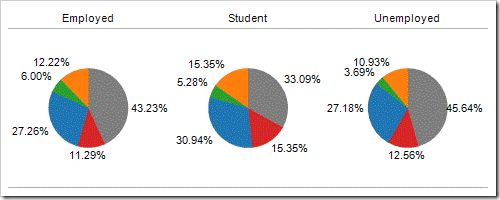
15% student respondents admitted still being able to use and access
YouTube, comparatively more than the unemployed (13%) and employed
respondents (11%).
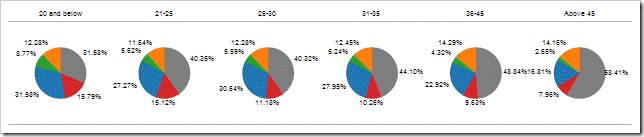
Another interesting trend is seen in the fact that the use and access
to YouTube diminishes as the respondents’ age increases. Where 16% of
the respondents below 20 admit still using YouTube, for those above the
age of 45, the rate falls to 8%.
In the Aftermath of the Ban
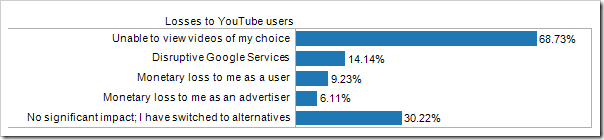
69% of the respondents, who used YouTube before the ban, said because
of the ban they have been unable to view videos of their choice. For
others it has resulted in monetary losses: for individuals who used to
it promote their business (9%), advertisers (6%) and has disrupted their
other Google Services causing problems in business operations (14%).
However, 30% of the respondents reported they have been able to cover up
their losses by switching to alternatives.
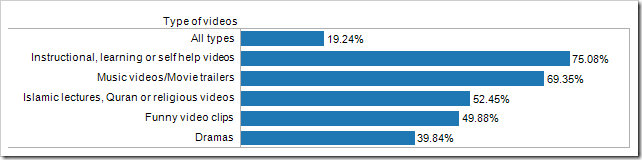
Majority of respondents, who used YouTube primarily before it was
banned, said they watched instructional and self-help videos (75%),
Islamic Lectures (52%), and movie trailers and songs (69%).
| The preference for males and females for
using YouTube differs slightly with females showing comparatively more
preference to watching Dramas than their male counterparts. However,
surprising to note where 54% of the men who used YouTube use it for
religious purposes, while only 38% females have been using it for this
purpose. |
 |
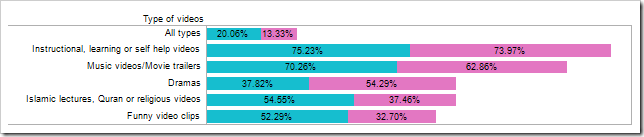
Instructional, learning and self help videos tops as a reason for
using YouTube for both men and women. One aspiring artist from Lahore
voices her distress over the ban, “I’m a poor artist who cannot afford
fancy productions and Media releases. All I had to promote my cause and
my music is now taken away from me…. And there are many like myself who
are trying to spread positivity, peace, love and healing. Also as a
corporate trainer, I used a lot of useful videos on YouTube in my work,
now I cannot. Other sites don’t offer half as much useful information
and insights and instructional videos.”
Disappointed with Google?
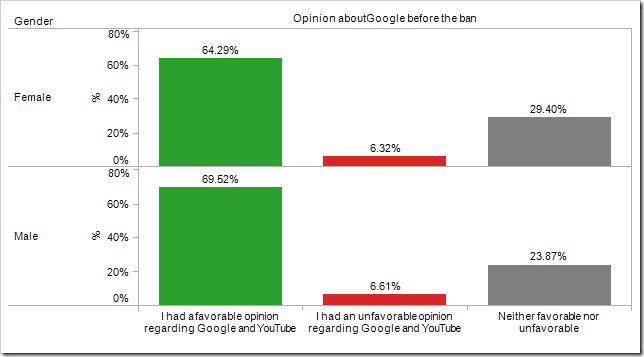
Whereas 69% of respondents had a favorable view of Google before the
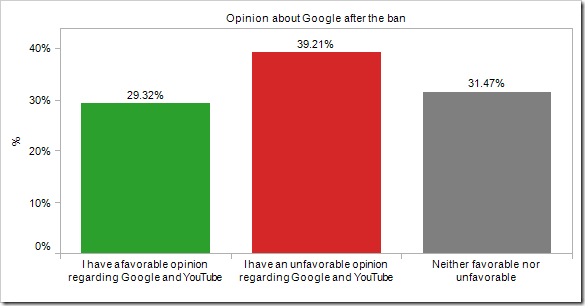
YouTube blocking, this number dropped to only 29%. 39% now view Google
unfavorably and of these 20% held the view that Google was antagonistic
towards Muslims.
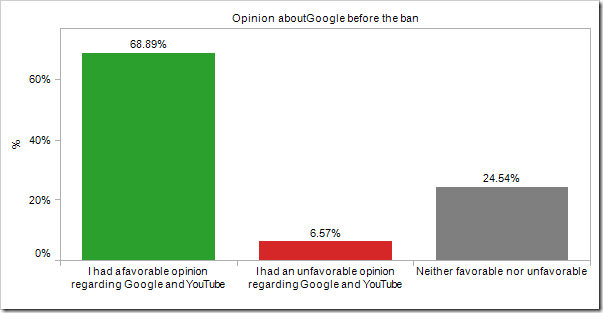

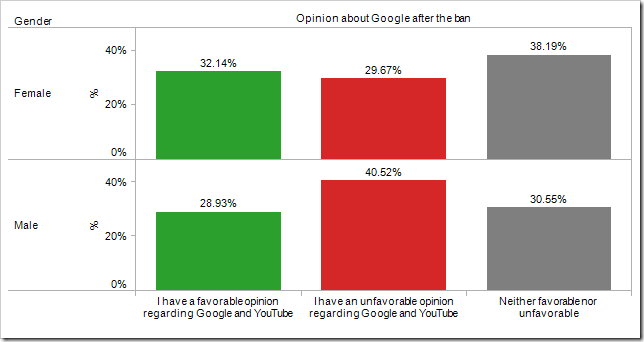
For males, the opinion about YouTube after the ban has drastically
switched; with 6.6% considering it unfavorable before the ban, but after
the ban a whopping 40% have an unfavorable opinion about Google and
their YouTube services.
How Just Is Google?
Only 15% feel that Google’s action decision to not remove the video
is justified. However a massive 64% of the respondents were of the
opinion that Google has been unreasonable with its decision to not
remove the video from YouTube.
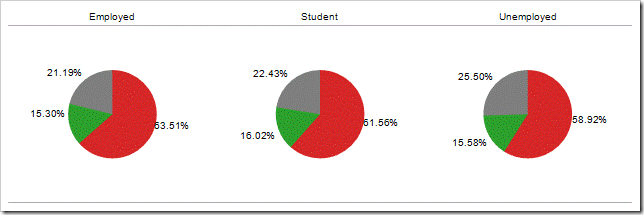
The perception doesn’t falter for employed, student or unemployed
respondents as each feel Google is being unreasonable by not removing
the video. Employed respondents (63%), however, comparatively feel more
hurt by Google’s adamant nature.
Google vs. the Government of Pakistan
48% Pakistanis feel that Google isn’t allowing the removal of the
video from YouTube which is why the decision to unban YouTube in
Pakistan is still pending. Others are of the view that it is the
Government of Pakistan that hasn’t lodged a formal request to YouTube
for the removal of the video. Users of YouTube in the past have exposed
prominent members from Pakistan government and political parties in
compromising videos and 27% feel that it could be a possible explanation
as to why there has been a delay in YouTube being banned from Pakistan.
Some of them (27%) also felt that it could be both Google and
Government of Pakistan’s lack of interest in the matter which has caused
a delay in decision regarding the ban on YouTube.
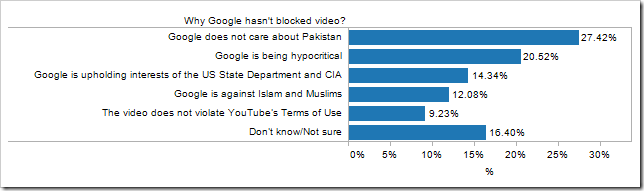
Why Is Google Being Uncompromising?
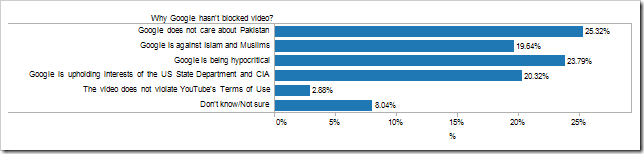
A majority (27%) believe Google does not care about Pakistan to be
bothered with the efforts for unblocking. Others (20%) are of the view
that Google is being hypocritical because it had blocked the video in
India, Saudi Arabia, Indonesia but not Pakistan. Rest of the respondents
(12%) feel that reason why Google has not blocked the video is because
it is against Islam and Muslims and Google is upholding interests of the
US State Department and CIA (14%).
However, a meager 9% feel that the video does not violate YouTube’s
Term of Use, and hence makes Google justified in their actions.
Ban or Not to Ban: That is the Question
A majority of the respondents (46%) are unhappy with the ban
declaring their disappointment at how the ban isn’t for the better. 44%,
however, felt that the ban is justified.
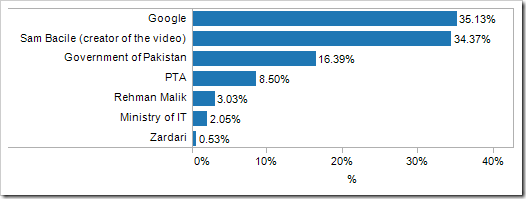
Of those who oppose the ban, held Google (35%) and Sam Bacile, the
creator of the video (34%) primarily responsible for the ban on YouTube.
Others’ view was divided between the Government of Pakistan (16%),
Pakistan Telecommunication Authority (8%), and Rahman Malik (3%).
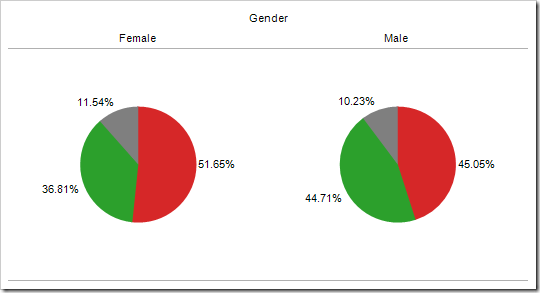
| Female respondents are less welcoming of
the ban as their male counterparts with 52% of them opposing the ban.
Male respondents feel most torn in their decision to evaluate the ban on
YouTube with almost equal number (45%) opposing and appreciating the
ban. |
 |
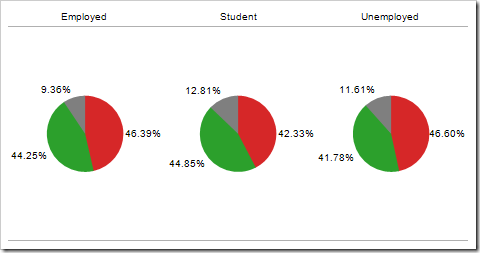
Respondents working status break down shows a similar perception for
the three classes: employed (46%), student (42%) and unemployed (47%);
with the majority feeling the ban isn’t for the better.
Conclusion:
In a nutshell, the ban has been unwelcoming by the Pakistani internet
community at large. However, Google and its YouTube services have
severely taken the hit with the ban in place with their unyielding
decision to not remove the controversial content. Majority feels they
have acted in an extremely hypocritical way and their antagonism for
Pakistani Muslim community is very much obvious through their resolute
on keeping the video on their site in Pakistan only.
Methodology
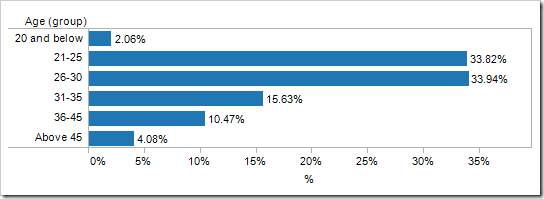
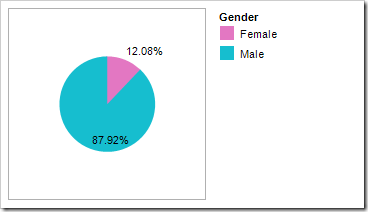
More than 3000 respondents took the online survey from across 165
cities in Pakistan; with majority of respondents being males and
belonging to the age group 26-30.
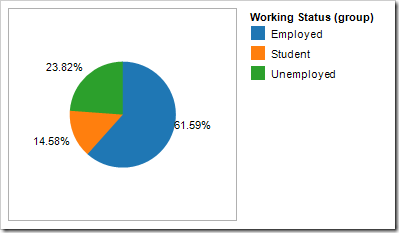
62% of the respondents were employed with 15% student respondents taking part in the survey.
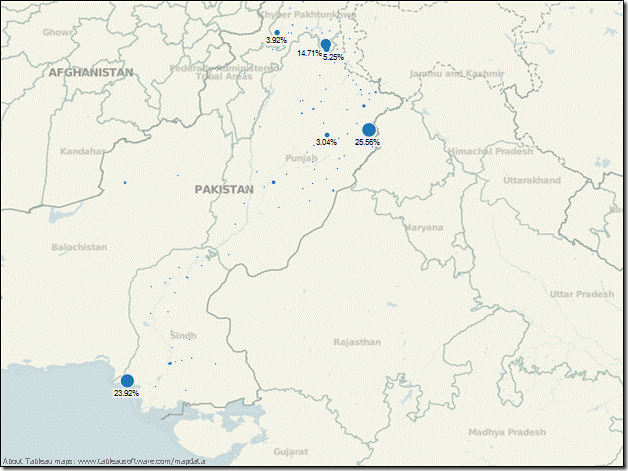
Majority of respondents hailed from Lahore (25.56%), Karachi
(23.92%), Islamabad (14.71%), Rawalpindi (5.25%) and Peshawar (3.92%).




 Mobilink has announced Twitter Zero for all its prepaid Jazz and Jazba customers to let them tweet without any charges at all.


